Let's Cook Up A Story
Overview
An interactive installation that taps into childlike wonder as you learn grammar through hands-on play.
Role
Interaction Design
Visual Direction
Code Developer
Fabrication
Tech Stack
Arduino
p5.js
Figma
Flora AI
Claude Code
Team
Minami Matsumoto
Timeline
4 Weeks (Nov - Dec 2025)

The Challenge
Grammar is hard.
How can we make learning sentence structure feel fun and intuitive for children with different learning styles?
Design Principles

Each shape represents a part of the sentence
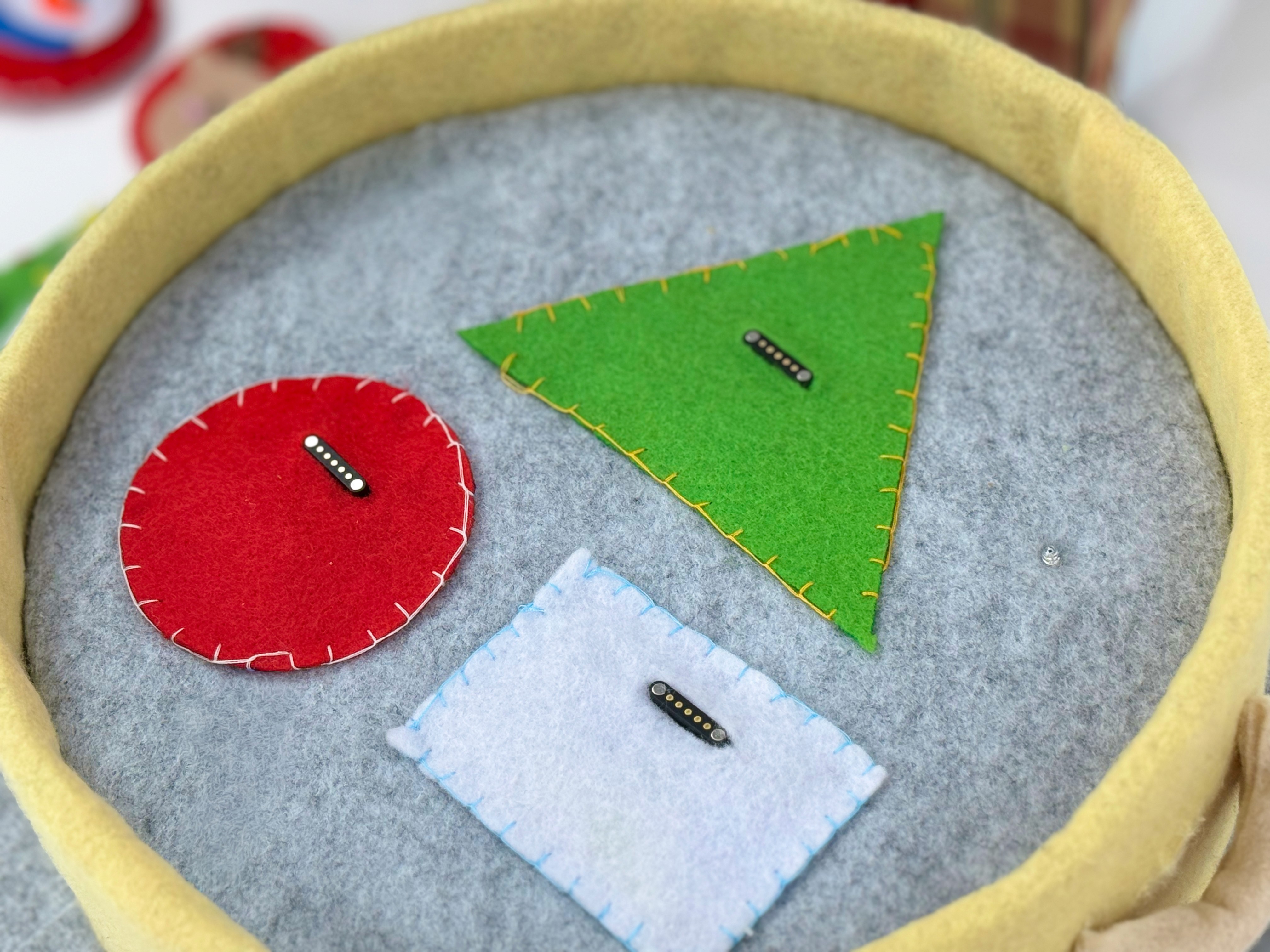
Subjects are circles, verbs are triangles, objects are squares. The shapes tell kids each part of a sentence does a different job.

Built for small hands
We chose magnets over hidden sensors, so connecting a piece gives a satisfying click, forgiving for kids with limited motor control, and intuitive for everyone else.

Feedback you can feel
Touch, light, sound, and animation layer together so the lesson lands through more than one sense at once
How it works
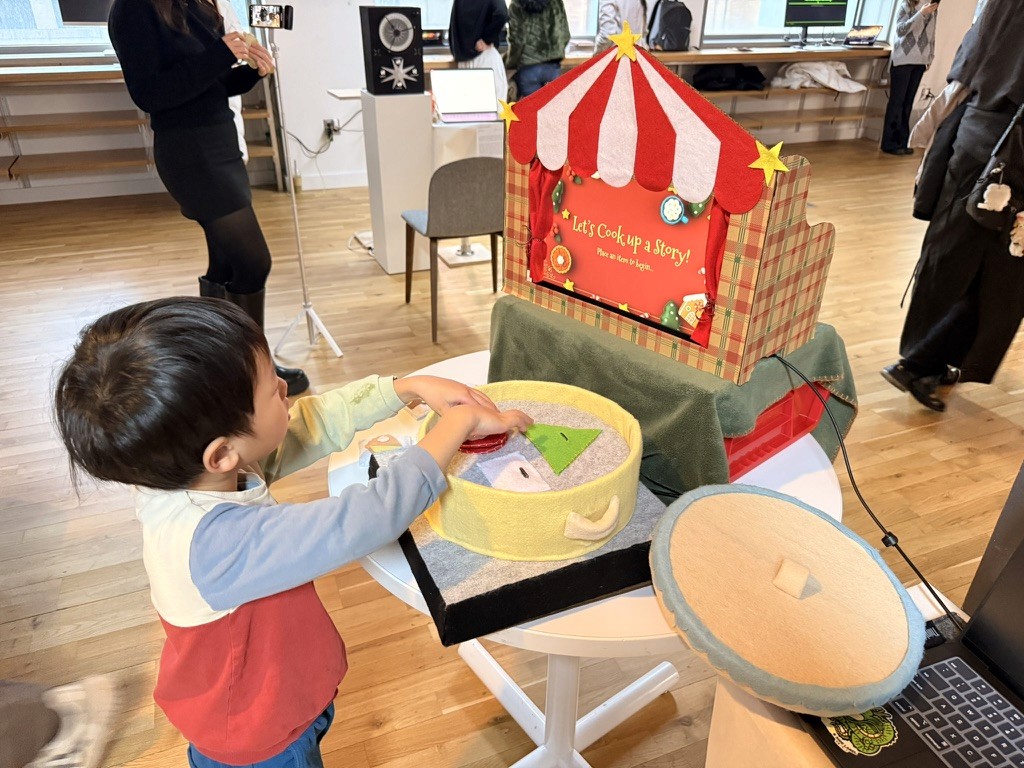
Select felt pieces and place them into the cooking pot
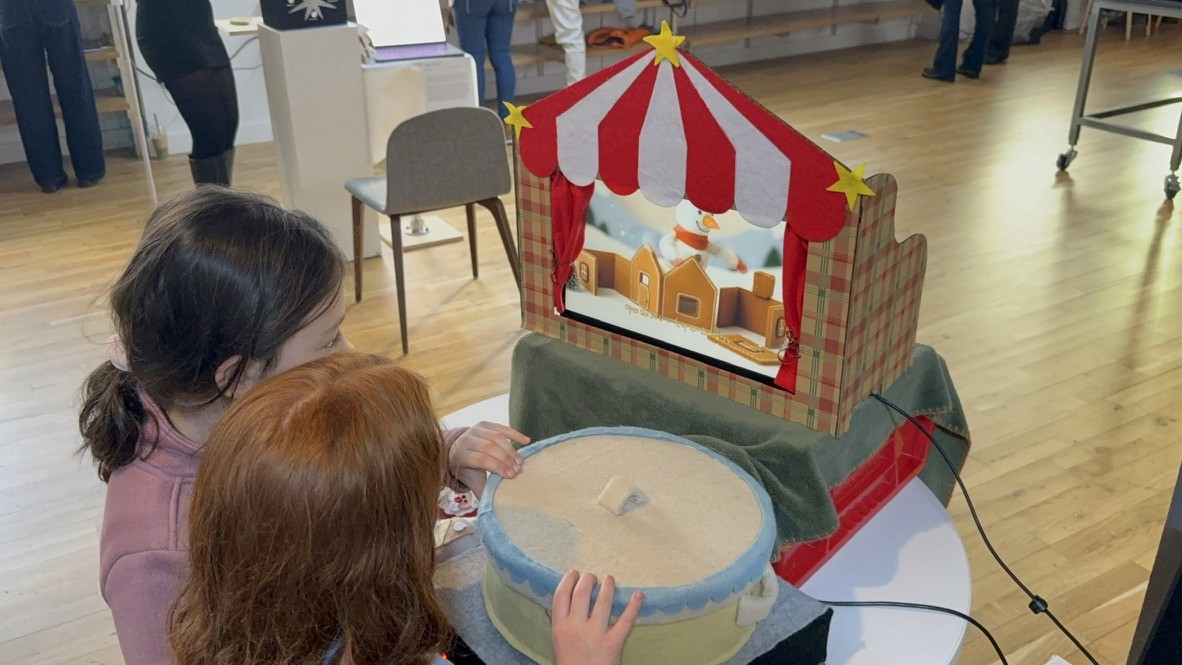
Close the lid to trigger the magic
Watch your custom story unfold on the puppet theater display


Awards & Showcase
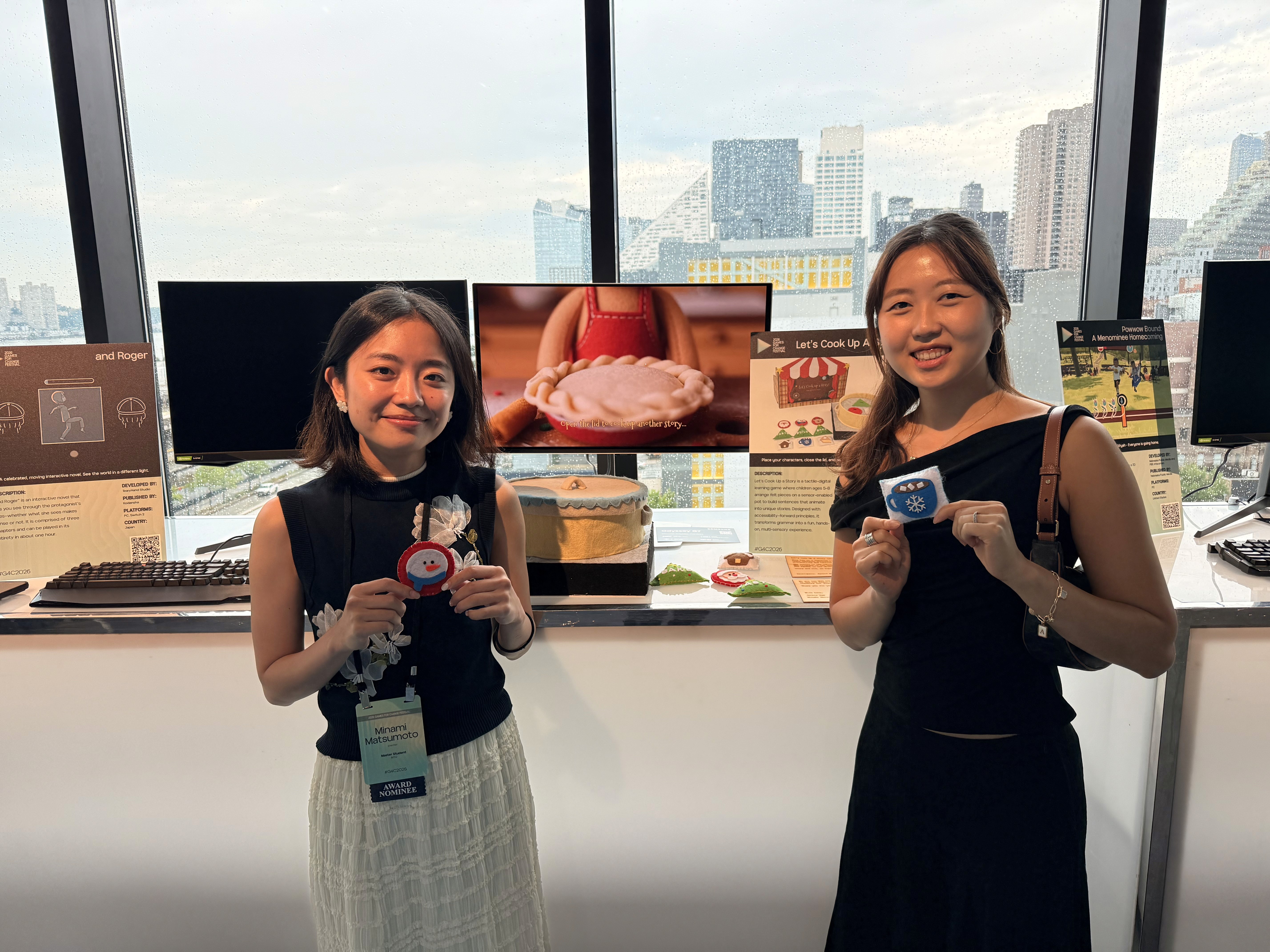
Best in Learning Finalist | 2026 Games for Change
July 21, 2026
We were nominated for Best in Learning for the 2026 Games for Change Competition. We were nominees alongside XBOX, Sony, and MIT Media Lab.



Artiact WHOOPS Exhibition
Jul 9-12, 2026
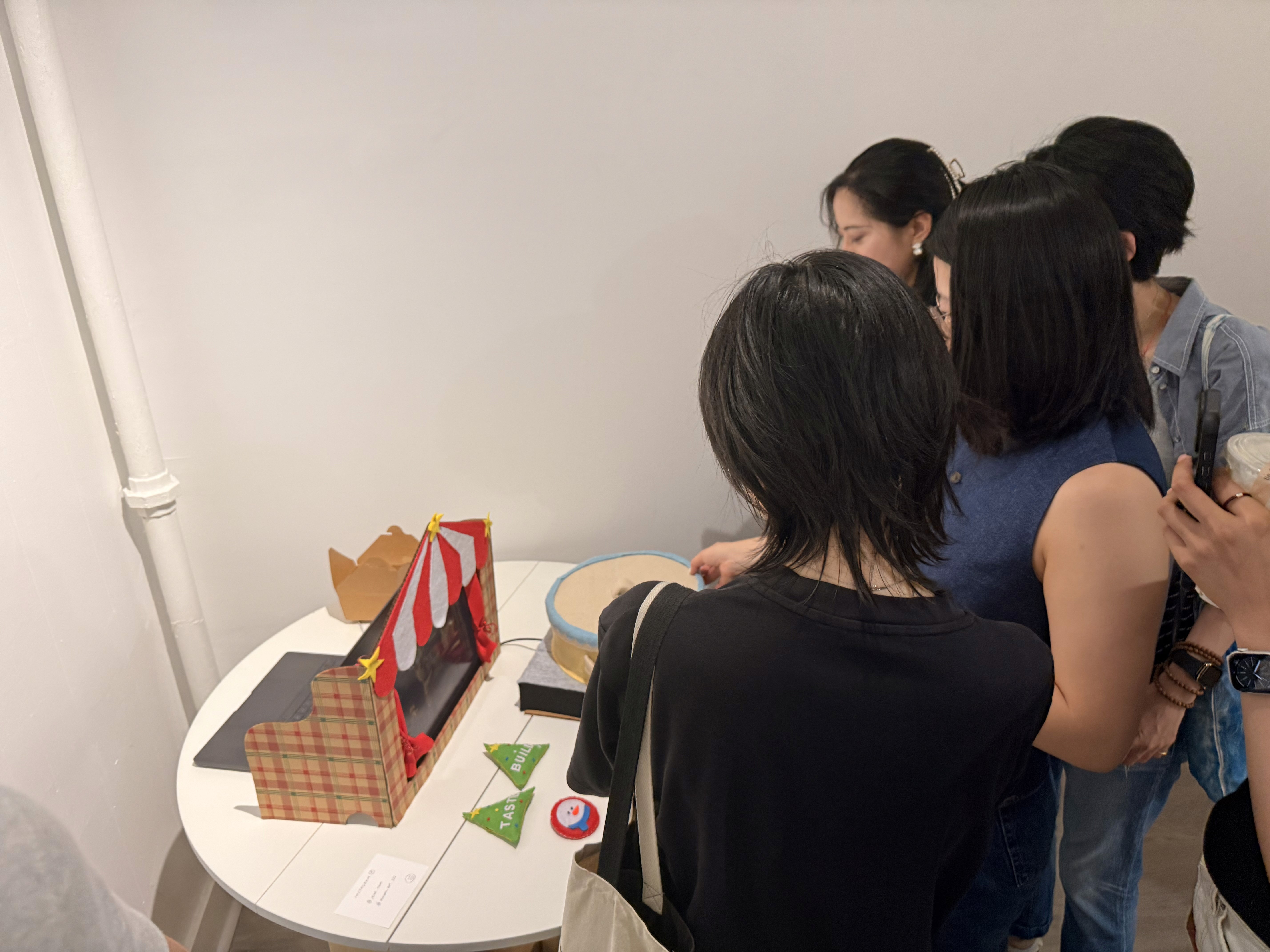
We exhibited at Artiact's Interactive Pop-Up, highlighting interactive art across multiple mediums.



NYU ITP Winter Show
December 15, 2025
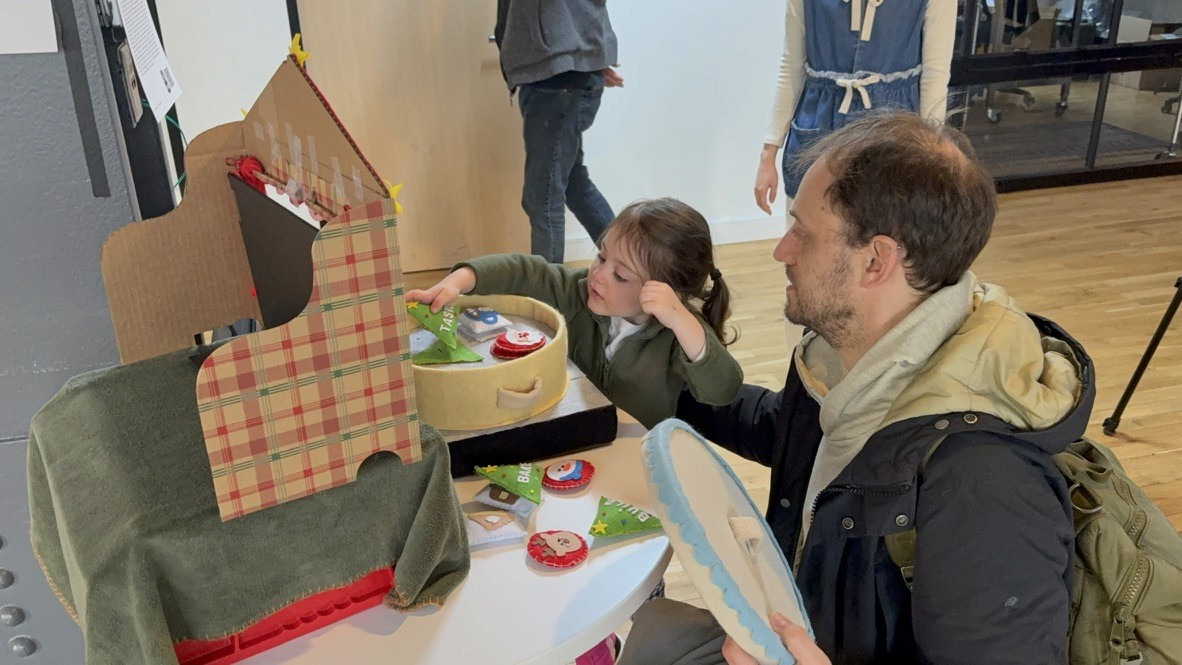
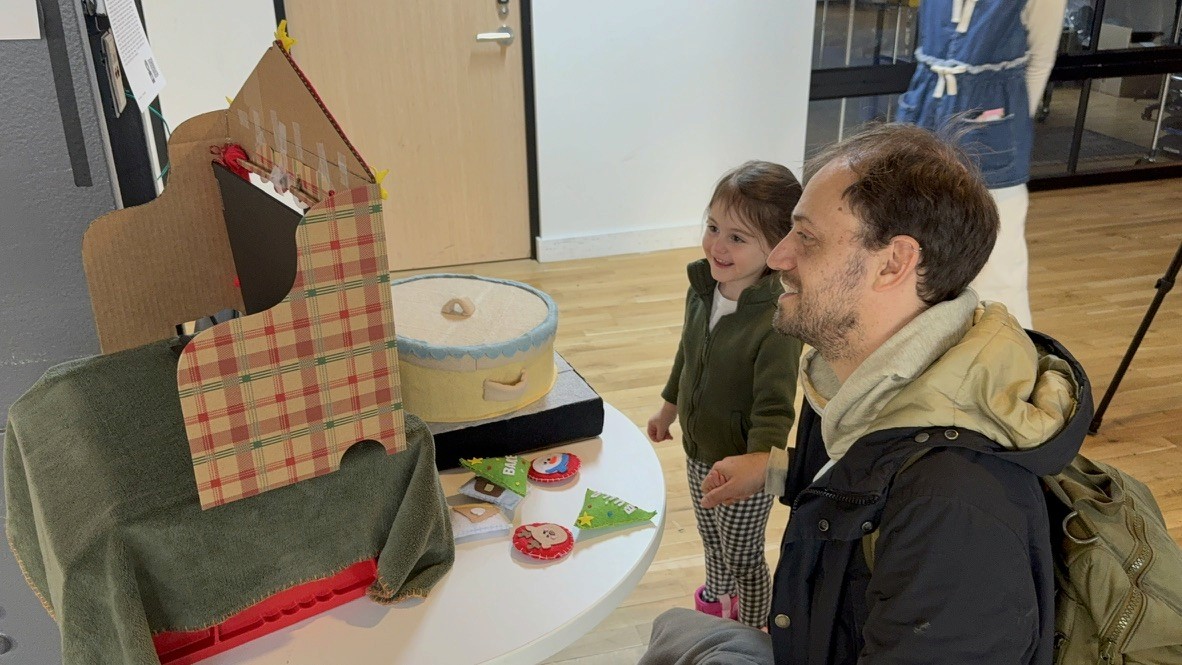
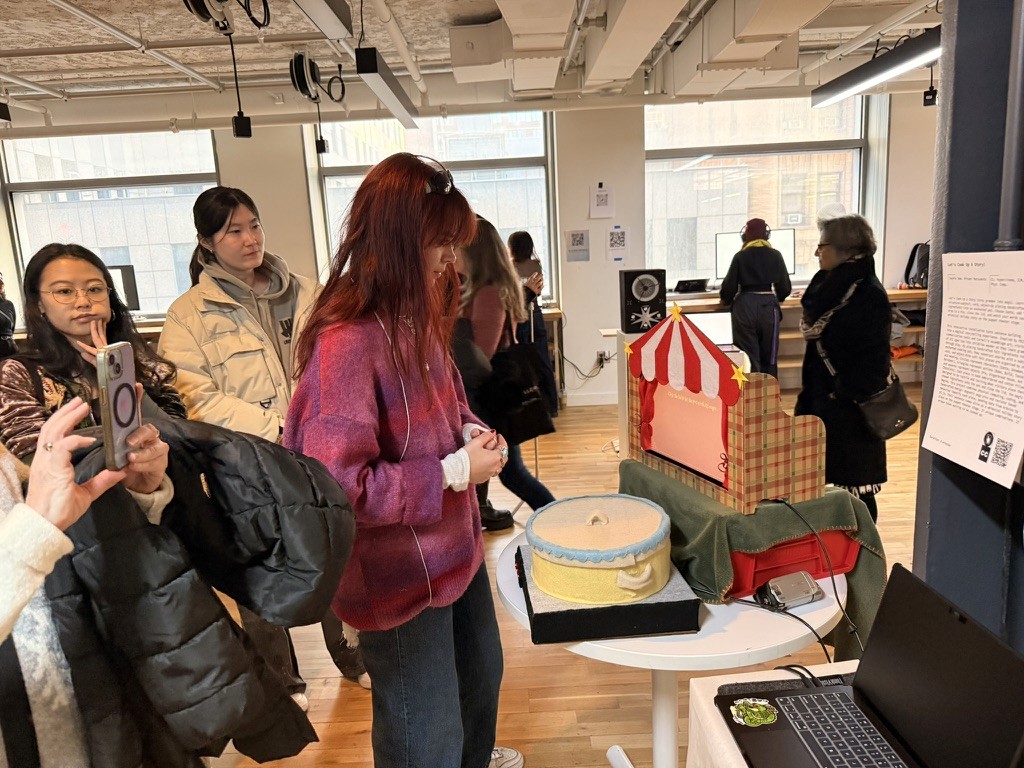
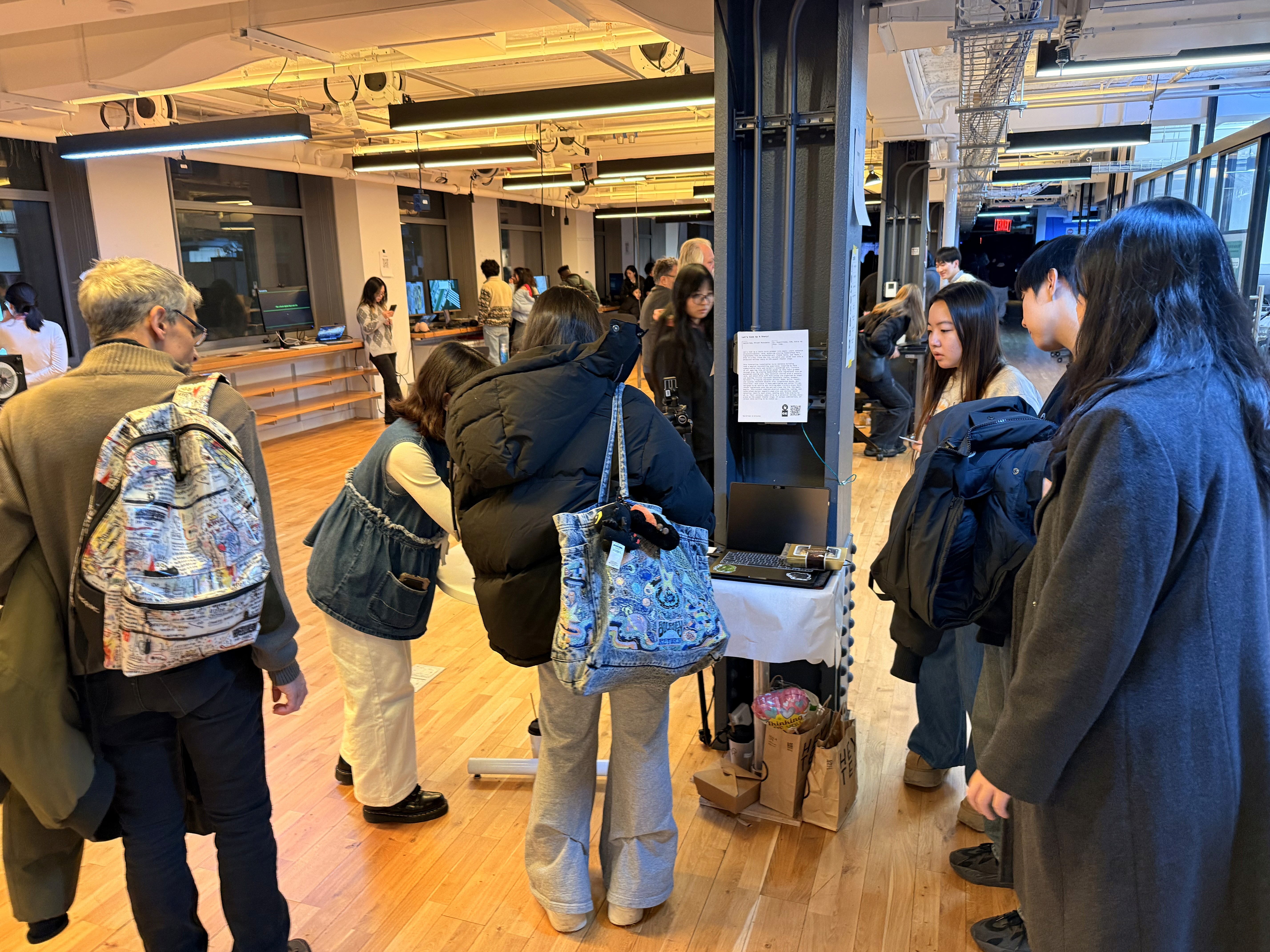
We didn't expect such a crowd, and it pulled in everyone from young kids to adults. What struck me was how quickly people jumped in. That's the part screens can't replace: real learning and real play is through doing.
Reflection
Kids felt in control
Making their own choices kept them engaged for longer, staying an average 8 minutes.
Collaborative experience
Parents and peers naturally collaborated, discussing which pieces to choose.
Fun for everyone!
Adults didn't just watch. They also played, proving that lowering barriers benefits all users
The Process
For those curious to see the process and tech behind the magic…
Research & Discovery
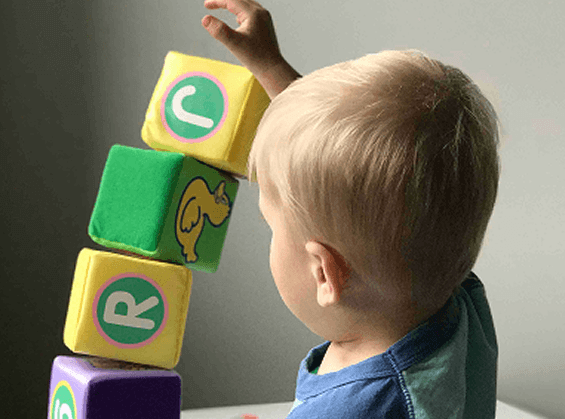
Observational Research
Observed how children with autism play to understand natural play patterns
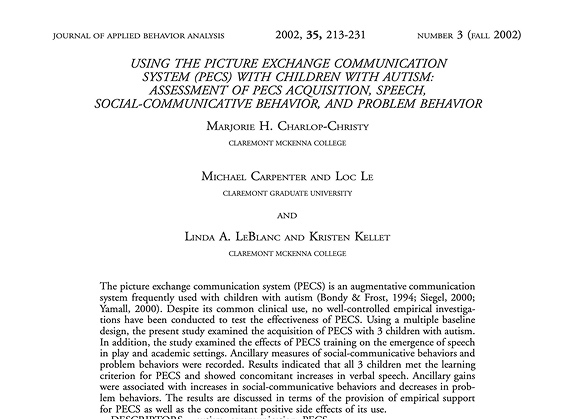
Literature Review
Researched PECS communication methods to guide design choices
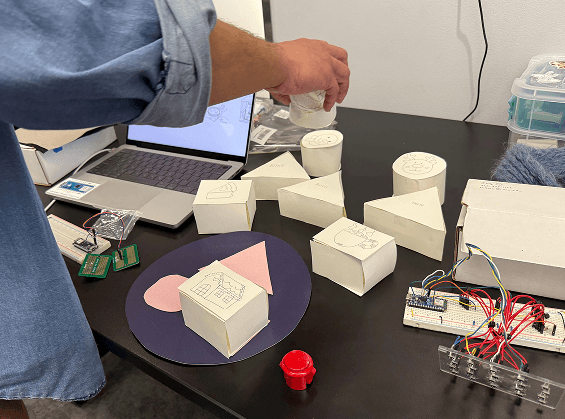
Play Testing
Tested prototypes with children and adults to spot usability issues
Key Research Insights
Kids learned faster through hands-on trial and error than through verbal directions.
Users frequently changed their minds, swapping pieces repeatedly.
Kids needed visual and tactile cues, especially for interactions that required precise placement.
How the sensors work
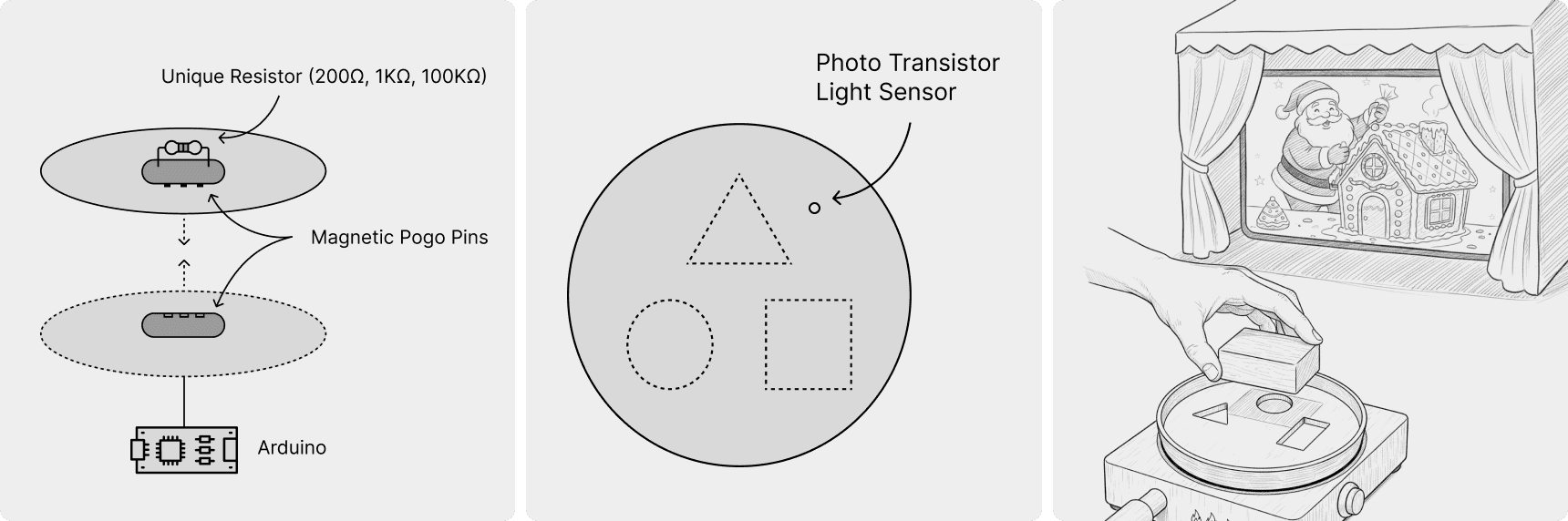
Each felt piece has a unique resistor inside. When placed on the pot, the Arduino reads its value. Red LEDs light up to confirm connection. A photo transistor detects when the lid is closed, triggering a video uploaded to GitHub through code written in p5.js.
Design + Code

Figma was used to design the digital interface and Flora AI to create the animations. See my code
Related works
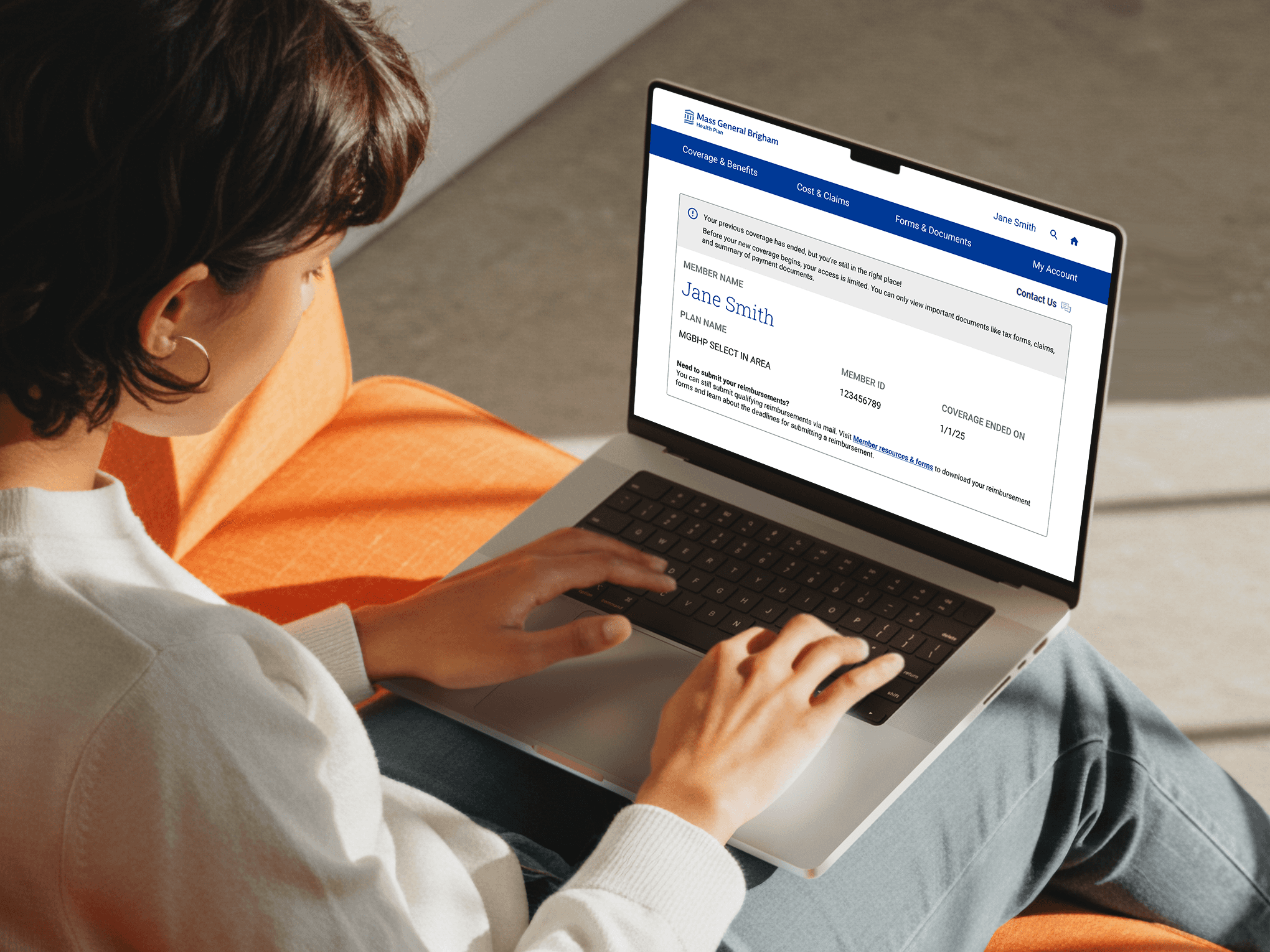
Solving Self-Service for Health Plan Members
How do you help someone find what they need in the middle of a healthcare crisis?

Dandi
How might we design for women who've been sidelined by the medical industry
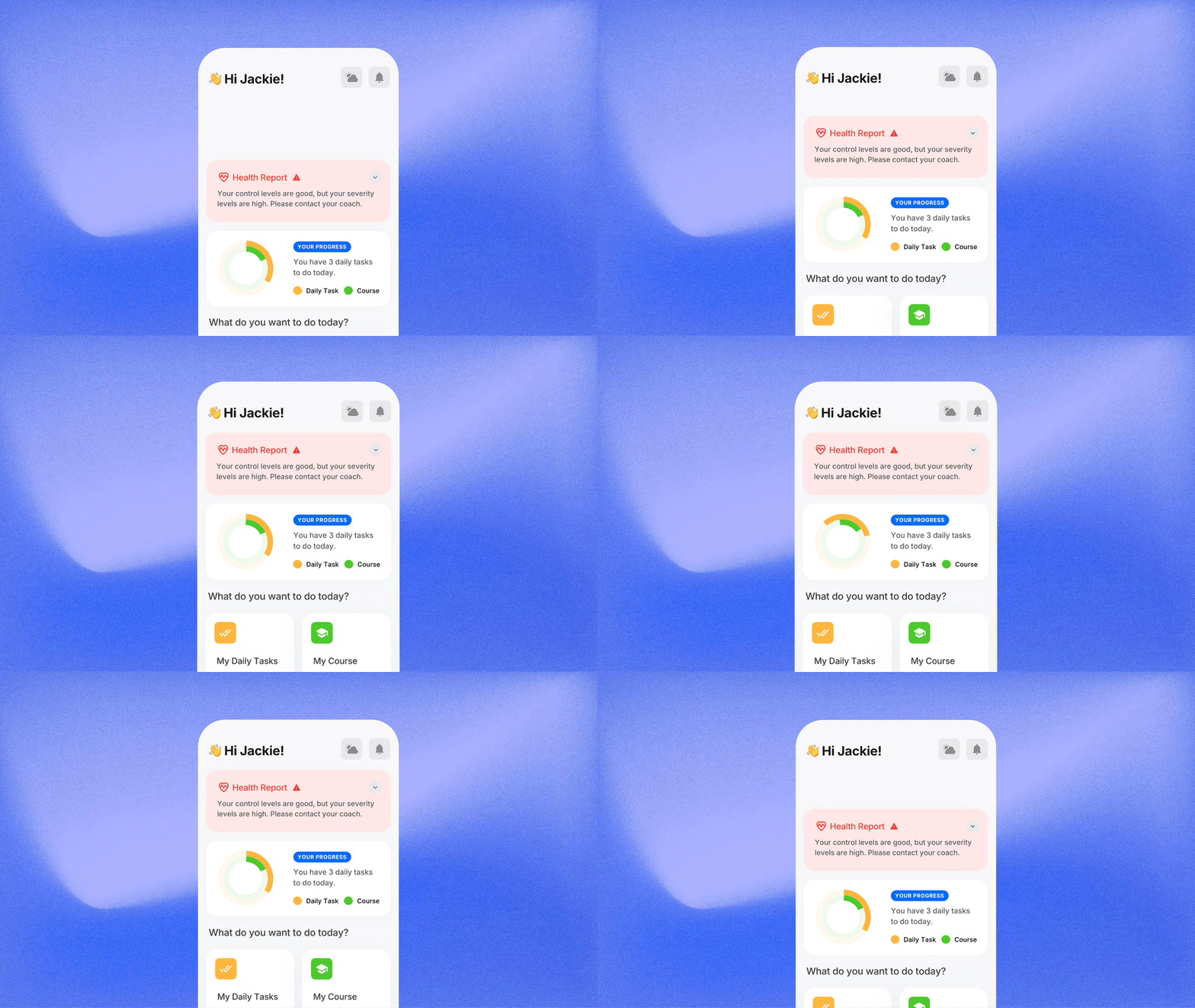
Redesigning Remote Recovery for COPD Patients
How do you keep patients committed to their care plan when the nearest clinic is miles away?
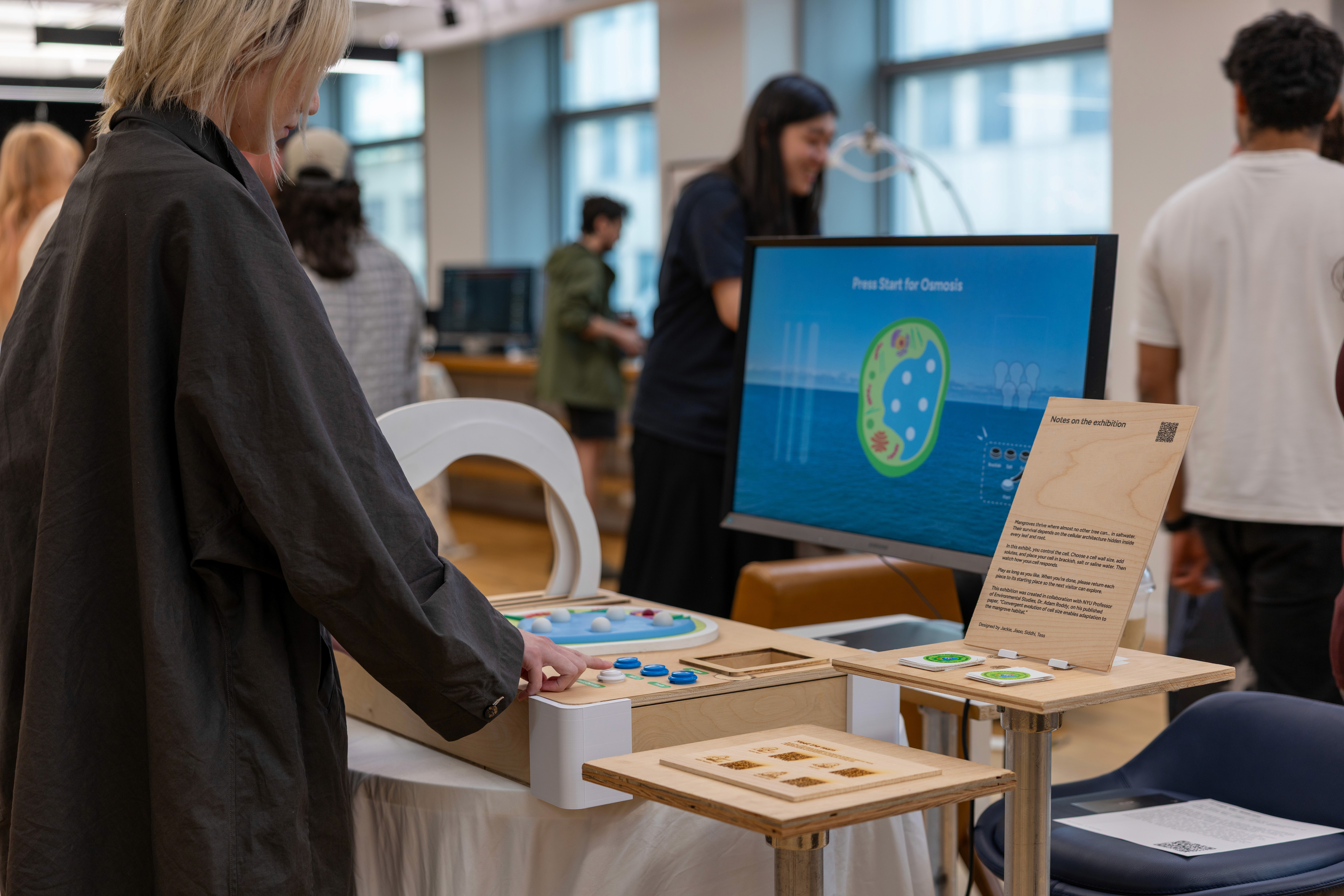
Through the Membrane
How might we translate complex research into a simple way?