
The Problem
Many educational toys and resources are either too expensive or not catered to meet the diverse learning needs of neurodivergent children.
These products rely heavily on digital tools, which can limit hands-on engagement and creative problem-solving, especially for children with different cognitive and motor abilities.
90%
More than 90% of COPD patients live more than 5 miles from nearest rehab center
40%
patient drop off rate after 3 months
The Challenge
How might we create an inclusive, cost-effective educational tool that encourages creativity and cognitive-thinking skills through hands-on play?
My Role
Led end-to-end redesign as the sole designer
Led stakeholder workshops
Conducted usability test sessions and analyzed observational research to improve patient experience
Research & Discovery
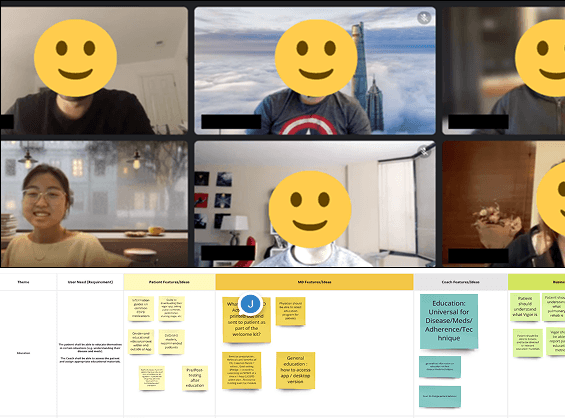
Cross-Functional Workshops
Led cross-function workshops to identify service gaps across clinical team, health coaches, and operations.
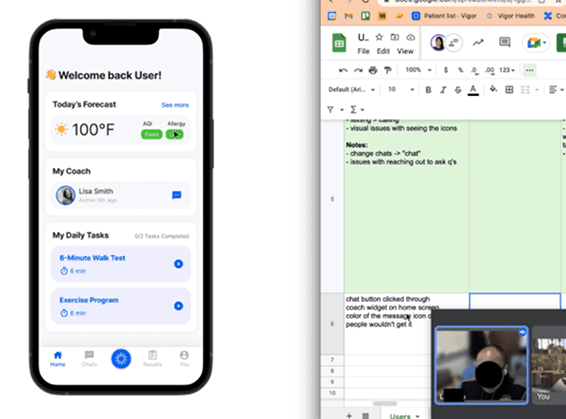
Usability Testing
Conducted sessions with COPD patients to surface critical pain points in app experience
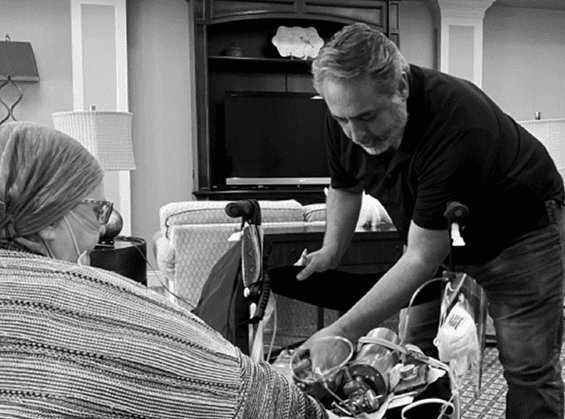
Observational Research
Shadowed health coaches to understand workflow bottlenecks and communication patterns
Key Research Insights
77% of users struggled to complete physical tasks independently, leading to a decrease in user engagement
Patients lacked motivation and agency; their condition significantly impacted mental health
Each health coach managed up to 40 patients, creating unsustainable workload without system support
Design Solutions
Pulmonary Rehab App
Gamification – Making Progress Visible
Motivation was a clinical problem as much as a design one. Progress tracking, achievement milestones, and clear next steps gave patients visibility into their care, reducing cognitive load while keeping engagement high.

Accessibility – Designing for Elders
COPD patients skew older, so accessibility wasn't an edge case, it was a core design requirement. Larger touch targets, clear visual hierarchy, and simplified navigation made the app usable for people managing a serious condition. WCAG guidelines informed text sizing and language, stripping medical jargon so patients could focus on their care, not decoding it.

Patient Management Portal
From Google Sheets to CMS Platform
Before this platform, health coaches tracked up to 40 patients across disconnected spreadsheets – a workflow that couldn't scale. I designed a centralized CMS where coaches could track patient data, log notes, and message patients directly, all in one place.

Onboarding Feature
Health coaches were spending too much time managing patient data across disconnected spreadsheets. The onboarding feature consolidates that entire intake process into one structured web platform: capturing personal details, medical history, vitals, and scheduling in a single, guided flow.

Impact
“Doctors just don't have time to go over with every patient. But I can see that Vigor has given me the tools. That made a difference.”
Real Patient Testimonies
84%
Patient retention after 3 months
40%
Reduction in emergency visits
148%
Average increase in daily steps
Reflections
Self-Agency Improves Health
Giving patients visibility and control over their own progress had a direct impact on health outcomes. Agency isn't just a design value… it's a clinical one too.
Human Connection
Some of the most meaningful improvements came from access, not features. Patients reported feeling better simply from having regular conversations with their health coach. A good reminder to design for connection, not just the interface.
Heatlhcare Providers
Designing for health coaches mattered just as much as designing for patients. When we reduced their administrative load, they had more time for actual care, and that showed up directly in patient outcomes.